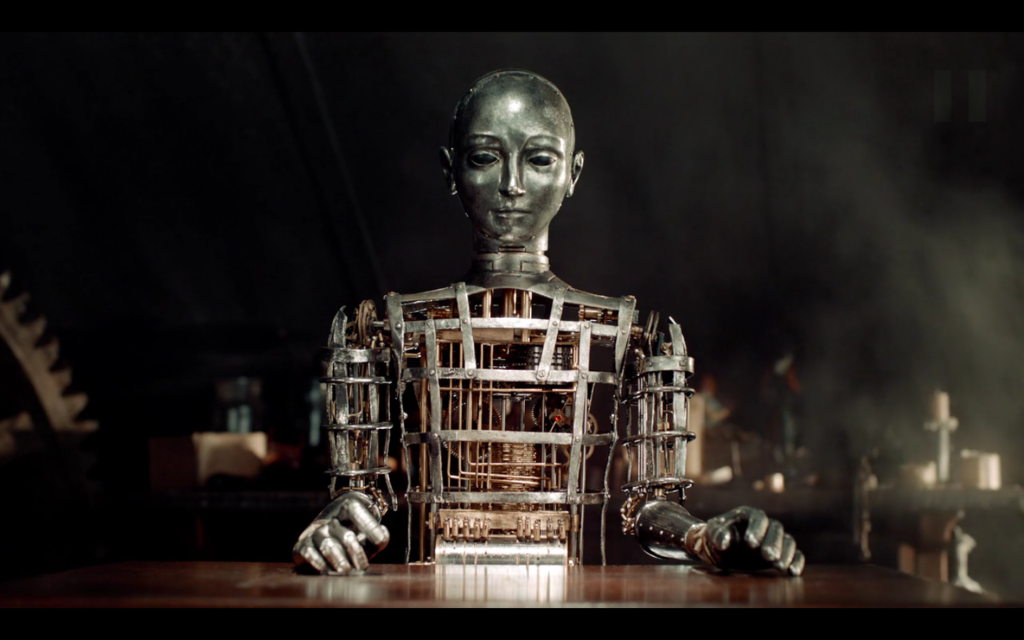
One of the reasons we so diligently hide ourselves from others is that on some deep level, we fear that we’re frauds. No matter what our age, no matter our accomplishments, when we look into the mirror, we still see the child we’ve always been. We see that curious, expectant being looking back at us, just waiting for the real adult to show up and explain to us what this all means.
Of course, that adult never shows up. We wait expectantly throughout our lives to hear the answer, and it never comes. After time, as we age, we suddenly find ourselves in positions of authority. We are parents. We are bosses. We are teachers. In spite of these newfound roles and responsibilities, however, we still feel like children. Even though we become the leaders, we are still secretly waiting to be led.
In spite of the fact that we, ourselves, have no idea what’s going on in the world, we value the power of the roles we’ve been given. We want to be respected. We want to be followed. We genuinely want to lead well. Because of this, we hide our doubts about ourselves. We bury our insecurities deep within. We create outward manifestations of strength, and the less we believe in our understanding, the more elaborate these spectacles of authority become.
The reason few of us feel like adults and the reason why few of us feel like we actually have a clue as to how this world works isn’t because we’re too stupid to understand. We cling to the stories of our ancestors and build the walls of false self-assuredness, not because we’re incapable of understanding the world, but rather because we fear the world our understanding would reveal to us. In other words, we all know what’s going on, but we choose not to accept it because it is hard.
We don’t want to admit that this universe created us by accident. We don’t want to admit that this world doesn’t care whether we humans survive or not. We don’t want to admit that even those we perceive are in power can’t really direct our social institutions. We don’t want to admit that we feel powerless in our own lives. We don’t want to admit that we’ll never know the reason why. And we don’t want to admit that one day this universe will end us, never to consider us again.
We hide like children because we are children. We are children who would rather cling to the apron strings of illusion, as long as they can protect us from what we fear. We tell ourselves comforting stories about our world, so we don’t have to face the meaninglessness of life. We don’t feel like adults because we aren’t adults, and we aren’t adults because we have abdicated the responsibility of living in the truth.
This hiding from our responsibility is one of the ways that our denial of death keeps us from authentically communing with each other. In place of the truth from which we could speak plainly with each other, in place of the truth in which we could be certain of what we said, we project illusions of confidence and self-aggrandizement in an attempt to protect our positions of power from those who might expose us as the impostors we are.
Protected we remain, and yet at what cost? Our illusions protect us from being exposed, but in turn they prevent us from freely exposing ourselves. When we’re forced to act like adults that we are in fact not, we end up playing a game of sock puppets with each other–our projected personhood speaks in place of our true selves with the other’s projection. We’re not interested in these projections though. These fake adults are so utterly boring to each other. They exchange pleasantries about the weather and the kids, but they prevent us from ever truly knowing or being known.
Isn’t it time we stop playing this game with each other? If we each have the courage, individually, to accept ourselves for what we are and to share that broken and fully human self with others, might we find that those others are exactly the same and that we didn’t need to hide at all? We might. And we might actually find ourselves in a better world than the one we work so hard to project to each other, for it is only by genuinely communing with each other that we shall find the meaning that we so desperately seek.
If there is one thing that we as humans tend to desire more than anything else and yet go to such extreme lengths to avoid, it is intimacy. Nothing nourishes the soul like sharing something deeply personal with another or sitting still and listening as another unburdens their own deepest thoughts and fears. Why then, when such interactions are the ultimate win-win for those involved, are these moments so rare? What, if anything, can Thanatism teach us to make these moments as common as they ought to be?
We’ll discuss this paradox a great deal in the coming posts, but fundamentally, the reason we lack intimacy with each other is because we each make the decision to hide ourselves. We each have a private conversation going on in our heads throughout our day that we keep inside. This conversation is our most precious secret and we guard it intensely.
Not only do we choose throughout our lives to keep this conversation private from the world at large, but most often, we also hide ourselves from those we are closest to. Children hide their private conversation from their parents. Parents hide their private conversation from their children. Spouses again and again hide their internal dialog from each other. And most interestingly, we often, to some degree, even hide our deepest and most intimate thoughts from ourselves.
On some level, this is adorable, of course. Nearly 7 billion little monkey people sneaking around the earth, telling themselves stories about their world, others, and themselves, each fully intent on never letting their secret conversation be discovered. What makes this especially cute is that we’re all so bad at hiding and so expert at perceiving. We’re like toddlers who cleverly sneak into the kitchen to steal a cookie, only to leave the cookie jar open, make a trail of crumbs to our bedroom, and fall asleep clenching our half-eaten prize.
This picture of humanity, all of us playing a childish game of hide and seek would be entirely charming if it weren’t so utterly tragic. The tragedy lies in the consequences of our hiding. We understand these consequences on those rare moments in life when we stop playing. Every once in a while, perhaps even just a few times in a lifetime, either because we learn to trust another fully or just as often, because we just simply can’t keep it inside anymore, we let it all out. Like a dam, overwhelmed by a storm, our secret person, that person who has been held back for so long, gushes forth, often literally, as the tears stream down our faces.
And what most often in these moments of vulnerability is the reaction of the other? Are they horrified? Do they mock us for our pain? Perhaps, but not often. What we most often encounter is love. What we most often feel is a vast opening up on their part as well. The breaking down of the walls that keep us locked inside unleash our personhood so violently that the flood of who we are destroys the walls of the other, and for a brief moment in time, the waters of our secret lives commune with each other freely.
And that’s the word isn’t it? Free. In these moments of intimacy, in these moments where we stop holding ourselves in, we feel free. As we cry, the tears turn from tears of grief into tears of laughter. A lightness takes over our being and we wonder to ourselves why we’ve worked so hard to keep ourselves hidden. For a brief moment, we feel viscerally the foolishness of keeping ourselves locked away. Why, we ask ourselves, have I been living in a prison of my own creation for so long?
Obviously, once we’ve experienced this freedom and the absurdity of the game of hide and seek, we stop playing it forever. Once experienced, we run from our self-imposed cage, never to experience captivity again. If only. What happens, of course, is that our freedom lasts only a moment. Almost as quickly as the flood came, so do the waters of our being recede back into their hidden place. Like a diligent colony of ants whose passage is covered over by a curious child, we quickly rebuild our private world so thoroughly, it’s as if the walls were never breached.
This is our secret dilemma as the people of earth. We spend incalculable mental resources to hide ourselves from each other, in spite of the fact that we clearly see the futility of others’ attempts to hide and have experienced the joy of freedom when we have stepped outside of our own walls. What great force must keep this paradox alive? What could be so psychologically powerful that we would willingly imprison ourselves throughout our lives?
Fear is what holds us captive. We hide because we are afraid. We build walls because we are afraid. We turn inward into our private worlds because we are afraid. And what is it, ultimately that we fear? The answer is rejection. We hide from others because we’re afraid they’ll reject us. We’re afraid that if others see us for what we are, they’ll reject us. And yet we’re still left with the question of why. Why do we believe others will reject us?
The answer to this, and the key to rebuilding our intimacy with others, is that we fear that others will reject us, because we’ve already rejected ourselves. We’re ashamed of ourselves. Our ever-me wants us to be eternal, but that’s not what we are. Our ever-me wants us to believe that we are in charge, but we are not. Our ever-me wants us to believe we put others first, but it categorically does not.
Because of this, the ever-me tries to convince others we are something more than what we are because it knows it is a lie, and it needs the affirmation of others to prop up its existence. It knows on some level that it’s an illusion, so it projects the lie of itself unto others, so that they might mirror back a reflection of ourselves it desperately wants to be true. It is this projecting of false selves and rejecting of the person we are, that destroys human intimacy. The good news, however, and what we shall explore in what follows, is that when we escape the self-centered illusion of original sin, when we destroy the ever-me we love so dearly, much of what divides us as humans crumbles along with the walls of our former selves.
As an entrepreneur I’ve built a number of companies. One thing I always tell prospective employees and investors is that I can’t ensure the success of the business we’re building, but I can assure them that we will build a place where everyone will be fully empowered to develop and express their individual gifts as they work together toward a common cause. The reason I focus first on building a great team is because no matter what we do in life, a huge part of what ultimately matters is the people we do it with.
In life, most of us tend to underappreciate the people around us. Often we put things and our personal goals before the people we spend our days with. Thanatism obliterates these warped values. Things are nice, but they will die with us. Our personal goals are hugely important, but everything we build will one day be destroyed. Thanatism is ultimately a bleak faith. Nothing we do has any ultimate value. Nothing we do will ultimately survive. These are hard truths to live with. So what’s left? If your most inspired creations last only for the blink of an eye, where is the meaning in life?
I remember reading Rollo May’s Love and Will in the late nineties. I was in my 20s, and struggling with the realization of my own mortality. I’d checked out a number of books on death and dying from the library and was blown away by Love and Will. I’d always listed five thinkers as my biggest influences: Hegel, Nietzsche, Freud, Heidegger, and Wittgenstein. Rollo May was a practicing psychoanalyst who was strongly influenced by exactly those same guys. Reading his book was like having a conversation about death with an older, wiser me. I’d never felt such kinship with an author before.
I don’t remember much of the book, but throughout it he was referring to conversations he had with a patient who was talented, but unable to create. At the very end of the book, after countless years of therapy, when talking about the meaning of life, the patient said, “I guess all that really matters in life is that we do it together.”. If Thanatism has any defined answer to the meaning of life, it is exactly that–being with one another.
After finishing the book, I did something I had never done before. I went to my computer, found out where Rollo May lived, and wrote him an actual physical letter. In it I described how much his book had meant to me. Most importantly, I wrote that I wanted him to know that no matter how his writings were currently perceived, that I understood him. I wanted him to know that there was at least one other person in the world who really got what he was trying to say. I finished my letter with the line, “I just want you to know that there is someone else out there who will carry on this message.”
I got a reply in a few weeks. It was my letter, unopened, with the words “DECEASED” stamped across the front of it. The point being, nothing will ever “get” you more than another human being. There is nothing that will ever understand what it means to be a human besides the other humans whom we meet every day. Being with each other, even just sitting together in quiet understanding, is the only way to know and be known, and that mutual understanding is the closest thing to “meaning” we will ever know.
I’m writing this on a beautiful Easter morning. It wasn’t my intention, but the significance isn’t lost on me. As you may have noticed, I often reference the Christian tradition. At one point, it was my truth, and I still carry with me much of what it taught. Easter was particularly meaningful for me. It was, and is, the celebration of one of the greatest stories ever told–a man who refused to believe that in life we’d become all we could, and who in death showed that the faithful shall rise again.
On this morning, we’re here once again to affirm that what we are is not all we can become. I don’t believe that humanity is destined to fight our petty fights for as long as we all shall remain. If we continue to give into our fears and continue to flee from that which we already know, I have no doubt that we have just begun to tap the cruelty and self-interest we seem sometimes so wired to perpetuate, but the good news of Thanatism, and that of all faiths, is that we are more than our biology. Thanatism teaches us that each of us can become more than what we currently are.
That change will not come from some outside authority rescuing us though. It will not come because we have been deemed worthy of everlasting life. Just the opposite, in fact.
If you want to become all that you can be as a human, it must start with accepting what you are. You must accept your body. You must accept your limitations. You must accept that you’re importance resides in you alone. And you must accept that at some point, you will be no more.
Through this acceptance, you will kill the ever-me–that “you” who you’ve nurtured and built up throughout your life. As with any death, this will hurt. It’s hard to let go of ourselves. Once done, however, you will find that the real you shall arise–a new you, one that has always been there but covered over by your fears. It may not have the majesty or privilege of the ever-me, but it will have a power that you’ve never experienced before–the power of the real.
You will know that you are living in the truth. You will know that there is no trial that life can bring that you haven’t already accepted. You won’t have to run anymore. You’ll be able to look into yourself and see that which is beautiful and that which is not. You will learn to live and work in the real.
In so doing, you will have taken the first step toward creating a new and better world. It’s foolish to think a new world can arise without the death of the old. It is foolish to believe that a new world can arise while its human inhabitants remain the same. Before we can begin to build a new and better world, we will each need to “die” again, and that death begins now and with you.
It is a great privilege as a human being to have a chance to start over. It is a great privilege to be able to see this world anew for the first time. It requires courage. It will cause pain. It may break you beyond repair. Do you have a choice though? When you look deep inside, when you put aside what you want, and look rather at what is, can you ever see yourself as the all-important, everlasting being you’ve struggled for so long to maintain?
I can’t. I couldn’t even if I wanted to. And having lived here in the real as long as I have, I don’t want to either. If you feel the same. If you would like to live in the real. And most importantly, if you would like to find others who no longer can or want to be something that they are not, I invite you to join us.
I’ve spoken of conversion as the path to personal change, but why conversion? What’s the magic of this particular path? To understand this, I want to briefly explain a common mistake materialists make and how, although we know of nothing in this universe outside of the simple and elegant material interactions described by our physics, it is actually spirit that currently dictates much of our lives on planet earth.
When we speak of conversion, what’s actually happening on the physical plane? I’m working to convey meaning through my words, and you’re working to understand them. When we connect, and if what I mean is meaningful and right for you, your brain begins to change. Certain neural pathways that used to connect deeply get obliterated, and new pathways are born. What makes Thanatism particularly impactful is that the neural pathways it targets form the base of a tree from which the branches and leaves of your thoughts mostly grow.
What determines how those new neural pathways will form though? A simple and naive materialism would say that your eyes transmit certain lightwaves to your retina, those light waves are converted to chemical and electrical signals in your brain, and it’s those chemical and electrical signals that form the new pathways. This is entirely accurate, but when it comes to an adaptive, information processing system like your brain, the physics are simply the medium of change, not the cause.
If rather than reading these words, you heard them spoken, although the physics would be entirely other, the neural transformation would be largely the same. In other words, it’s not the deterministic bouncing of particles that determines what you think, but rather the logic or meaning of what is being conveyed that shapes the ultimate physical outcome. Just as it is the logic of the code in a video game that determines what’s eventually displayed on your screen rather than the physics of your particular gaming platform which that logic utilizes, so too is it the logic or meaning of what is said that determines the restructuring of your brain.
This conversation or logic or meaning is where spirit resides and this is the true focus of power in our human world. We can’t change the laws of physics. Our social institutions are so rigidly manifested that they are largely beyond our control. Our minds however, can change in a millisecond. These words, their meaning, as they are being processed by you right now are having their effect. They are pushing against well-established neural pathways, and if your brain is ready, they will rewrite you at your core.
You are spirit incarnate. You are the history of biological competition on this earth. You are the history of the birth of sexuality. You are the history of the first meaningful grunts our ancestors ever shared. You are the history of countless dialogs between people. You are the history of a million words written down. You are nothing but your history and your biology, but that doesn’t mean that’s all you can ever be.
You can’t understand anything except through what you are, but through words, I can convey a different spiritual history conferred upon me by my biology, my culture, my family, countless teachers and peers. I can channel their collective voice and share that voice with you. You may reject this voice, and that may be as it should be. You may, however, let this be a moment where you let a new voice wipe away the defenses that hide from you what you already know and fear. You might allow yourself to be reprogrammed at the lowest level, and if you do so, that new you can speak, and through your voice, there shall emerge a new us, and that new us is how we will change the world.