The previous post began to stray into real world politics. I want to say now though, that I really believe Thanatism is a politically neutral faith. Although it is neutral, from what I’ve written already, you can see that it is certainly not politically benign. In order to demonstrate how it balances neutrality with definition, I’d like to discuss a bit of collusion between the right and the left that’s particularly relevant to Thanatism–something I refer to as, “Polite Society”.
Polite Society is the pact across the political spectrum to not talk about our core beliefs. At first blush, it appears to be an affirmation of individual liberty–no one ought to tell another what they should believe. Afterall, if our own beliefs aren’t sacred personal ground, what is? Although this sounds fine in principle, in reality, it’s not that simple. As we’ve learned, our actions flow from that which we hold as true in our core, and it is exactly these actions that are the subject of public concern. More importantly, we’ve learned that our social structures emanate from our own core values, and anything that determines the social structures that we all must live in, must be subject to public debate.
The point being, if we implicitly ban core beliefs from public discussion, we shall find that we never get to the root of many issues of disagreement when it comes to public policy. This unwillingness to discuss the personal roots of our public issues, is the fruit of polite society. And as I said before, this polite society is a conspiracy across the political spectrum. The left and the right merely use it in different ways.
Take for example, the left’s unwillingness to use the term, “Islamic terrorism”. The left would say that we ought not use this term because most muslims are peaceful, and further, much of what promotes terrorist thinking from these countries is their impoverished conditions, which are in no small part a consequence of policies carried out by the West. Be this as it may, to imply that the faith of the perpetrators of religious wars plays little role in their violence doesn’t do justice to the power of their beliefs. Take it from a former fundamentalist, those who choose to murder others for religious reasons don’t do so nominally–they do so because they are living their faith without contradiction.
A parallel demand from the right is its insistence that schools teach the theory of creationism alongside that of the theory of evolution. The very idea that our educational institutions should treat a scientific theory, supported by nearly endless data that has been subject to exhaustive peer review, the same as a theory written down by primitive people who were making the first human attempts to understand our world is absurd.
Both of these examples of polite society impoverish our ability to form policy. They both rest on an agreed assumption that we don’t have a right as a society to suggest that anyone’s core belief might be subject to error. Although I’m deeply sympathetic to the argument that individuals should have a right to believe what they want, when such beliefs impact the rights of others, they must become the subject of open and honest discussion.
Further, I might suggest that the universality of people’s willingness to exempt our core beliefs from honest public discussion is less a matter of protecting individual liberty, and more a matter of each of us protecting our right to turn away from that which we least want to accept. We don’t want to be questioned about our core beliefs, because we know that if we held them out publicly, they would be exposed as private defences against the painfully public reality that we shall all one day die.
Once again, this is what makes Thanatism such a powerful core belief, not only for us as individuals, but also for society as a whole. Thanatism doesn’t require us to accept a belief that can’t be talked about publicly. It doesn’t ask us to believe something that can’t withstand public scrutiny. Just the opposite–it simply asks us to accept what is a statistical, legal, and utterly public certainty. As such, it can stand as a foundation for public policy and can undermine the endless cycle of disagreement perpetuated by the false premise that respecting another person prevents us from questioning their beliefs. Rather, Thanatism explicitly forces these very beliefs into the realm of public discussion because it is exactly our core beliefs that have public ramifications.
I suspect the above will be one of my least popular posts. Nothing invites public derision like claiming that both the right and left are conspiring to hide the truth. Further, society’s concern to protect our right to believe is absolutely justified, as we have too many times experienced in the past the evil perpetrated by totalitarianism’s thought police. We must admit that there is inherent violence in any totalizing faith–Thanatism included, and that this must be guarded against with the greatest vigor.
But make no mistake, any attempt to exempt core beliefs from public scrutiny will end in exactly what we have today–a world divided. And although there are without doubt fantastic historical reasons to resist any belief that aspires to sit on the throne, ultimately, whether we freely choose that belief or not, that throne will be occupied. Better that we discuss which belief best deserves that place of privilege, rather than forbid this discussion altogether, for it is precisely because of the power of our core beliefs, that they are the ones we most insistently must bring forth into the realm of public discourse.
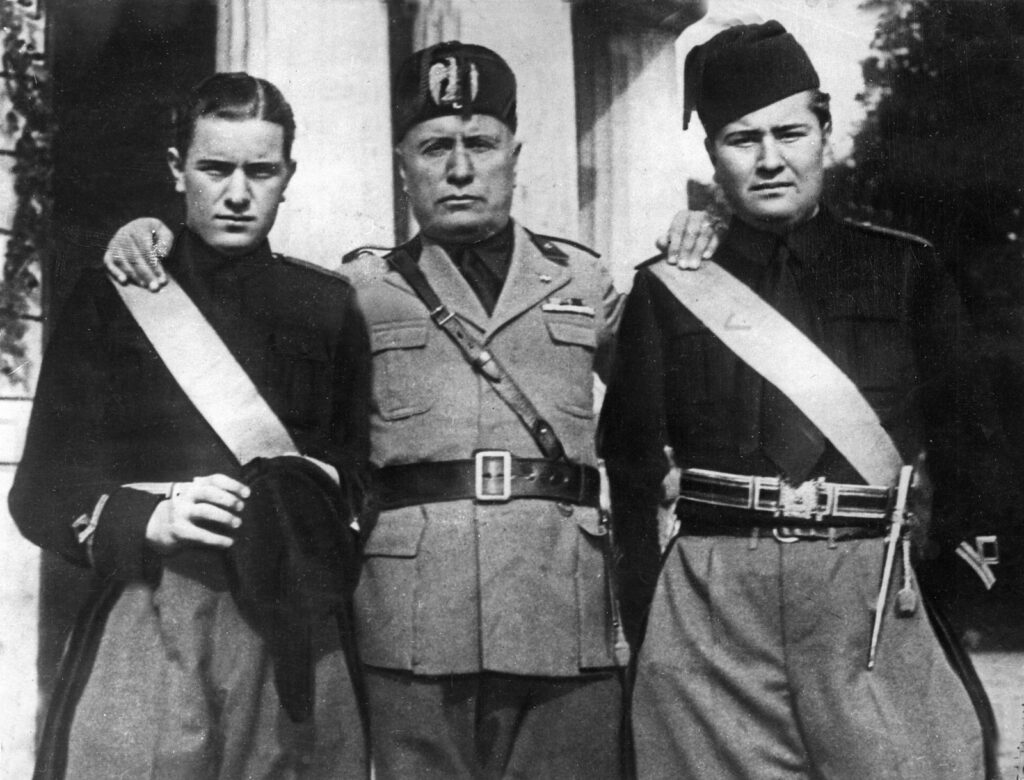
If you find this new vision of the future terrifying, you’re not alone. We can see the signs of our fear in the world’s flight toward authoritarianism. When societies are afraid, when they feel powerless to control their own destinies, that is when they run into the arms of strong men who promise to bring back what is forever lost.
Sadly, we’ve learned from the past that the promises these strong men make are illusory. We’ve learned that those who put on facades of strength are often those who are most afraid of the real. Strong men gain their power by taking advantage of the weak, and they view a frightened society, not as something to be protected, but rather as easy prey to further advance their own personal immortality projects.
As a Thanatist, I believe we humans are better than this. We don’t need leaders who will sell us empty promises. We don’t need leaders who bully the weak to make themselves look strong. We don’t need leaders who disregard the truth when it’s inconvenient. Just the opposite–we need leaders who are willing to look fearlessly into the future and, like the prophets of old, tell us exactly what we least want to hear.
The lack of truly strong leadership in today’s world, however, isn’t because the world lacks people who can lead well. Rather, we don’t have great leaders in this world because we, ourselves, are not yet worthy. In spite of our outward calls for someone to just stand up and tell the truth, we reject that truth when it doesn’t align with what we want to hear. We have leaders who sing us the sweet songs of fantasy because that is what we desire.
This paradox of our unwillingness to promote those whose voice is exactly what we need in our society mirrors that paradox which lies deep within most all of us. We turn our backs on society’s truth tellers, just as we turn away from the truth teller that lies in us all. This turning away from uncomfortable truths is something we nurture in ourselves, and until we each are willing to exorcise the anxiety that lies at our core, that which we refuse to look at or even name, only then will we be capable of accepting those who themselves see clearly.
The future is bearing down on us at a speed that we can barely comprehend. We as human beings need to find a common ground. We need to take a pause from our frenetic doing and consider what we want. We then need legions of smart, fearless, creative individuals to do what we as humans do best–take reality and mix it with human care to create a better tomorrow for us all.
That is a fearless society. That is something we will never have as long as each of us individually are running from our own mortality. Society is a reflection of each and every one of us. I want social change. I want a world that is united in its efforts to create greatness. I am writing about faith because all of this starts with us. Society doesn’t need to change–we do.
I’d like us to consider work for a bit. Work plays a number of roles for us individually and in society. First and foremost, work is how society gets necessary things done. Take the food chain for example. From research into agricultural methods, to the planting of our fields, to the transportation of our crops, to the storage of our food, its preparation, and finally to the disposal of our waste, feeding 7 billion people is no small task.
Let’s consider another function of work though–social justification, or as it works today, earning money. Work is how we earn the right to goods and privileges in society. If I work particularly hard or possess a particularly rare and valuable skill or attribute, society, at least in theory, rewards me with more money, which I can then use to provide for my family and perhaps even purchase some goods and services that make me happy.
Now consider who you spend most of your life with. Assuming you’re still one of those traditional go-to-work types, you probably spend most of your life with your coworkers. You work side-by-side. You go to lunches with each other. Maybe you go on business trips together. Perhaps you even go out after work to spend more time with each other. If you’re really lucky, you might even meet the love of your life at one of those post-work gatherings, in which case, you can spend the rest of your life with a one-time coworker.
Let’s not stop there. Work also provides meaning. Humans are designed to work. We take great joy in getting into a state of flow where we’re creating something of value. We haven’t decided as a society to take a collective rest after the last 100 years of technologically-driven productivity gains, not only because capitalism won’t let us, but also because we don’t know what else to do with our days. Humans need to work for their spiritual well-being.
Now let’s peak into the future of the agricultural process that feeds us. Imagine seeds developed by biotechnology arrays automated to test genetically modified seeds for yield, planted, irrigated, and harvested by GPS-driven tractors and irrigation systems. The crops from these are then distributed by AI-controlled trucks to automated warehouses where these products are further distributed to homes and businesses by more AI-controlled vehicles. There, they are prepped, perhaps first only in factories, but eventually in restaurants, and even at home by automated kitchens with all the waste collected by self-driving compost trucks.
That’s still a lot of work, but how many fewer humans are necessary to do it? Half? A third? Ten percent? Sounds great right? That’s a lot of hard work that we don’t have to do anymore.
Certainly, the creators of these technological wonders will reap untold billions, live meaningful lives, and have fantastic social circles. What about the people who we no longer need to do the work though? How do they get money? How do they meet people? Where do they find meaning?
Now I want you to consider another technology–personal entertainment devices. Currently Americans spend over 4 hours a day on these devices we currently call mobile phones. Most of us have felt the pull to just make a quick check to see what’s going on in our personally tailored world of infotainment. Now consider that the clever people creating our mobile apps have only been at this for about 15 years. Consider that their business models are predicated on finding ways to get us to spend more time with our devices. Consider them following this business model for 100s of years.
And what about the device itself. Do we really believe our current glass-tapping interface is the most immersive way we can interact with the digital world? We already wirelessly transmit audio information from them directly into our ears. What about when they can interface with our eyes as seamlessly too? What about when we no longer have to tap, but they register our physical movements as easily as the “real world”? How addictive could these devices become?
Now combine these two futures–one where we need to work less because the work is done by our creations with one where our virtual worlds are increasing in meaning as rapidly as our minds can imagine them. What do we become? What kind of society does this create? This is just one small slice of life too. What happens to society when these changes coincide with all the other ways we’re evolving what it means to be a human?
These are the kinds of discussions that we as humans ought to be having in the public realm about our future, but we don’t. Rather we prefer to pretend we live in a world that will always be exactly as it has always been. This should come as no surprise, as society is but a reflection of who we are, and we each work mightily to hold on to our ever-me, which has always been and will always be. This is a problem for society though, for when we each individually avert our eyes from death, we collectively blind ourselves to the future.
Through Thanatism, however, we can develop the habits and practices that allow the future to fully inhabit our present. By accepting the part of our futures we want to think about least, we develop the habit of seeing the future for what it is. In so doing, collectively, we can better prepare ourselves to navigate humanity though this point in history where radically new realities crash upon us, not over millions of years, but multiple times in a single lifetime.
The hand ax is a remarkable tool. Essentially, it’s a round rock that fits nicely in the palm. One side of the rock is then chipped away to make a sharp edge. Holding it in their palms, early humans used these simple tools for just about everything–cutting, scraping, digging. The oldest of these hand axes dates to about 2.6 million years ago. It was our first real tool as humans. Not only was it our first tool, but it actually reached its widest use only 200,000 years ago. Consider that. For 2.4 million years, our most important tool as humans was a sharp rock we held in our hands.
Since then, the pace of innovation has increased somewhat. It was also about 200,000 years ago that we first wore clothing. We didn’t have a boat until about 12,000 years ago. We started making decorations out of iron about 6,000 years ago, but didn’t use it widely until about 3,000 years ago. It was shortly before that, that we wrote our first words.
We invented the printing press about 600 years ago, which really kicked things into high gear. We had our first gun 400 years ago, steam engines 300 years ago, our first vaccine, car and telegraph only 200 years ago. Electricity and the phone came around 150 years ago, the airplane about 100 years ago, TV followed shortly thereafter, and 50 years later, all of humanity watched the first man land on the moon, which may have been the last time humanity all rallied around a single event.
The point is, as beings that evolved during a time when a rock was the state of the art for a couple of million years, for us to go from the horse and buggy to landing a man on the moon in a single person’s lifetime has been a bit disorienting. The fact that we’ve been able to develop the social institutions to manage this kind of unprecedented change, even if poorly, is nothing short of a miracle. Whether we like it or not, however, the pace of change in technology continues to accelerate, and I fear that our existing social institutions are having a hard time keeping up.
Thanatism can help us as a society become more agile though, and it can do so in two ways. First, the mass acceptance of our own mortality would be a conversion event at a scale unlike any humanity has experienced before. Having that many individuals reassess their core beliefs at the same time would give this generation an incredibly unique and valuable perspective. We could see that we’re capable of massively rethinking who we are as humans almost instantly.
More specifically, with Thanatism, our conversion isn’t a one-time event. As Thanatists, we will explore practices that daily confront us with our eventual end. These moments of “existential clarity” help create a space where we can cast off our daily mindlessness and consider, even if just for a moment, why we’re doing what we do. These moments of clearing help promote an incredibly agile mind, one that re-evaluates itself as a continuous and integral part of its being.
As we discussed earlier, society acts as a large-scale entity that reflects and amplifies the minds of the individuals of which it is composed. As such, we could hope and perhaps even expect that a society composed of Thanatists, who themselves have a natural proclivity to reconsider, might be better suited to considering and adapting to the rapidly evolving technological environment we’ve created for ourselves.
Static minds and a static society are perfect for beings that inhabit a static world. We’ve become so powerful, however, that our planet and the virtual ecosystems that we humans are increasingly immersed in aren’t static anymore. If you think the change from the horse and buggy to rocket ships in a single lifetime was difficult for society to navigate, imagine how quickly our world will evolve, once freed of the material constraints of physics and subject only to the constraints of the latest upgrade. In order to survive, each of us, and the society that we generate, will need the kind of agile mind that Thanatism promises.
I was raised in a relatively non-religious home during the 70s and 80s. We were nominally Christian and would go to church occasionally on holidays, but I certainly wasn’t raised to believe any religion was true. Like most young people raised without religion, I didn’t really give it much thought.
During what was then called Jr. High, I converted to an evangelical brand of Christianity. This conversion wasn’t only nominal, but something that deeply affected every aspect of my life. I deeply believed in my faith and worked hard to live a life of integrity, where what I believed in the core was reflected in my actions. Because of this, I became a leader in my church and community, and actively brought others into the faith.
During that time, one of my greatest burdens was that the members of my family weren’t Christians. This caused me great pain because I believed that their lack of faith would result in real consequences for them. One December evening, my Mom and I were up late talking. As sometimes happened, the conversation got deep, and I began to press her about her lack of faith.
She asked hard questions–exactly the kind any non-believer would. I knew more about the subject than she did though and possessed strong rhetorical skills. I had answers to her questions–answers that she accepted. At the end of that night, we prayed together and she accepted the truth of Christianity and the relationship with God it entailed. At the end of that prayer, it was past 3am, so we both went to bed.
It wasn’t my last prayer of that night though. The problem was that although the answers I’d given my Mom were good enough for her, they weren’t good enough for me. When I reached my bed, I collapsed to my knees, clasped my hands, and began to weep. I was crying to God. I told him what I already knew–that the answers I’d used to convince my Mom of his truth, were answers that I did not in fact believe myself. I told him that he and I were going to have to go on a journey together where I would have to explore our relationship fully. I told him I would never again convince anyone of anything unless I truly believed it myself.
That journey has brought me to where I am today, and as you can imagine those experiences have shaped my character in some ways. The first effect this had was to make me remain silent about spiritual matters for nearly 30 years. I had changed people’s lives as a Christian and set them on a path that I now knew wasn’t true. I took that responsibility seriously.
My reaction wasn’t to “rescue” them from what I’d done, partly because Christianity isn’t a bad life, but mostly because I wasn’t going to say anything to anyone unless I was sure I had something real to say. My experience with Christianity humbled me. It made me understand that I had been wrong before, and that I would be wrong again. It helped me understand how precious and rare truth is. It also made me understand that my words and my beliefs don’t just affect me–they have real consequences for others. It gave me a much greater respect for the power of belief.
This world, I believe, could benefit from people who better understand how important truth is and how cautious we must be before invoking her name. Social media has made us all authors. This is a great thing, as every voice matters. Having said that, the ease with which we can share our words has led us to disrespect the power that they have. It has created a society where the imperative to speak outweighs the imperative to speak wisely.
As Thanatists, we have seen how easily we bent the truth about our ultimate end simply because it was what we wanted to believe. As such, should a society of Thanatists ever develop, we might better remember how easily we can lead ourselves astray. We might better understand the power of our words. We might once again respect truth. I can only hope so, because this world desperately needs a people who are slower to speak, more willing to consider their errors, and who know how easily we can believe what we want, rather than what we know to be true.