The problem with revolutions, and one of the reasons we so rarely see them, is that revolutions are inherently violent. This should come as no surprise. Every change, no matter how seemingly benign, destroys that which existed before it. Although all social change involves some level of violence, how we go about changing society affects the nature of that violence.
When we invoke social change through institutional change, this violence has consequences that go far beyond our intent. Take for example, clean energy tax incentives. It hardly seems violent to support planet-saving technologies. Nonetheless, these policies, no matter how valuable to society as a whole, no doubt inflict real violence on some. For example, as clean energy becomes more competitive, coal becomes less so. Because of this, coal-fired energy plants close down, and subsequently, the communities, whose livelihood depended on supporting that energy chain, lose not only their economic purpose but their social purpose as well.
The resulting poverty, purposelessness, and eventual decline into drug addiction and social decay that has followed is real. And this just speaks to the violence that we can predict. Every large-scale social change creates not only these predictable violent consequences, but many others that we could never have known. Imagine the inventor of the internal combustion engine’s dismay to find that his invention of a nearly limitless, mobile source of power would in less than 100 years cause the preconditions for massive and destructive climate change.
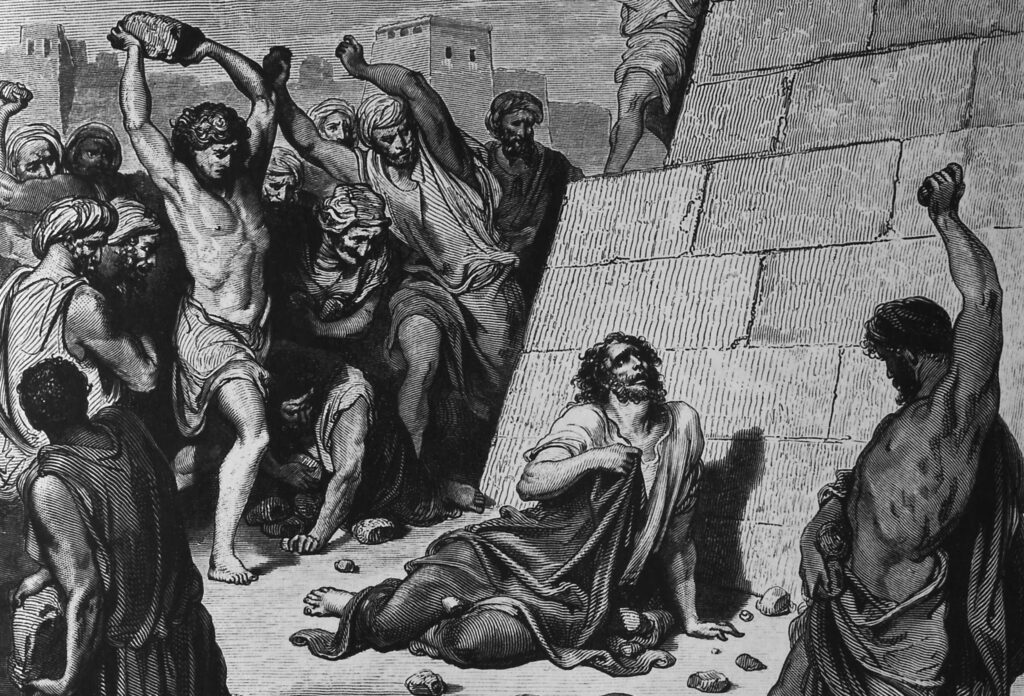
And these are the consequences of simple, incremental changes within a capitalist society. Can you imagine the violence that would occur if the foundations of such a system were changed? We don’t have to. When the Bolshiveks seized power in 1917, the violence wasn’t subtle or unpredictable. Those who represented or insisted on maintaining the previous social order were simply taken to the wall and executed.
That level of violence wasn’t arbitrary or because the revolution’s initiators were inherently violent people. Most were common laborers who were tired of not receiving the benefits of their labor. Those who possessed most of Russia’s wealth, however, weren’t going to turn it over to the people without a fight. In other words, the violence of the Russian Revolution was necessary to impart the structural changes they sought.
A Thanatist revolution, like any revolution, wouldn’t be without violence either, but rather than the violence of an external force like the state, the violence inherent in Thanatism is a revolution of the individual mind. It comes not in the form of firing squads, but in the self-chosen destruction of one’s old ways of thinking. I’m not minimizing that violence–the destruction of a mind is a most violent human act. This kind of violence, however, though it can destroy a previous life as thoroughly as a bullet to the back of the head, doesn’t just destroy. Rather, the violence of conversion frees the mind to create the world anew.
So although all social change is violent, that which is the result of a spiritual revolution is entirely other than that of an institutional revolution. When institutions are destroyed, violence is inflicted upon individuals by society. When we experience a conversion of the mind, however, choosing that new mind is an act of freedom–not only because we can only experience true conversion by the free acceptance of our new core, but also because the destruction of our previous ways of thinking creates a new horizon that enables us as individuals, for the first time, to choose what we want society to become.
When I was working on my Ph.D. in Philosophy, I became obsessed with a problem that was presented to me in Sigmund Freud’s Civilization and Its Discontents. In that work, Freud explains that it should be no surprise to humans that nature is indifferent to our happiness. When a hurricane destroys a village, we aren’t angry at the hurricane because the hurricane doesn’t care whether there is a village in its path or not.
Society, he explains, is different. Ostensibly, we humans construct society for our mutual good. In spite of this, however, it feeds back on us in often violent and unpredictable ways. His question was why? It’s important to note that he was writing this just 10 years after Germany had surrendered in World War I and five years before Hitler would come to power. In other words, his study of how society turns against those who have created it wasn’t only an academic question.
It was never an academic question for me either. In fact, I left my Ph.D. program to grapple hands on with social power structures to understand how they really worked–this was the beginning of my entrepreneurial career. Throughout that career, I built companies that were in some way subversive to what I viewed as unjust social power structures. What I reluctantly learned through building six such companies over the course of 20 years is that if you want to build a successful company, don’t try to change the way people do things, rather make it easier for them to do what they already want to do.
The youngest me would look at hurtful social structures, and naively believe that since we, as humans, had created them, we, as humans, could change them. A favorite line of mine was, “It’s not like they’re the immutable laws of physics.” A somewhat older and wiser me began to say the exact opposite, “Social structures are as real and intractable as the laws of physics.”
That didn’t deter me though. I still believed that in some way, our unjust social structures were illicitly foisted upon us, not by anyone in particular, but rather simply because it was really hard for us humans to control them. In other words, I felt that it was a technical problem, and that if we could just build the right institutions and the software to support them, we’d be able to create a society that would better serve us all. That’s not, however, the conclusion that Freud came to.
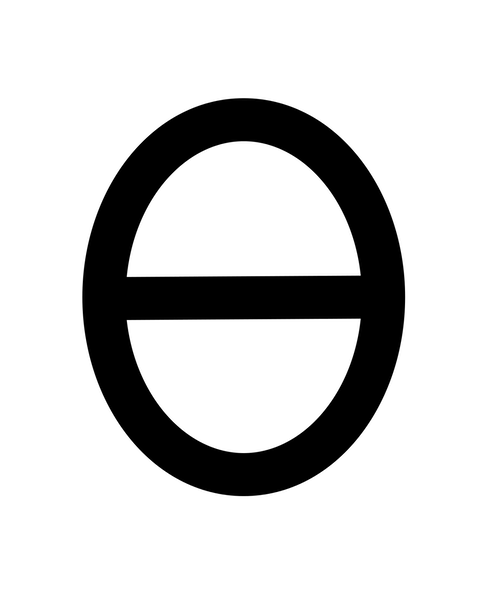
When I would discuss his work and its relationship to my life’s mission, I would say that although he had perfectly framed the question, he had ultimately come to the wrong conclusion. His conclusion was that society was a violent and destructive force because there was an equally violent and destructive force inside each of us. Ironically, he called this force, the “death drive”. In other words, Freud believed that society is a reflection of what’s inside each of us.
After 20 years of trying to prove Freud wrong, I must finally concede this point in part at least. The fact is, no matter what soothing stories we tell ourselves about how we humans control the course of our societies, that fact is that we don’t control them at all. Rather, society is a reflection of who we are. It isn’t something we create, rather it is something born. It is a large-scale, spiritual entity that feeds back on us exactly what we as individuals transmit.
I still, however, don’t entirely believe in Freud’s death drive. I don’t believe that we humans are inherently violent and destructive, and so shall our society endlessly perpetrate violence against us. Make no mistake, there may well be some violent and destructive tendencies deep within us, but what I also know about humans, is that we are capable of change. We, as individuals, are not just what we are born to be. We can overcome.
So you say want a revolution? Well you know, you better free your mind. For society will never change unless we as humans change. And for us to change, we can’t just keep believing the way we’ve always believed. The good news however, is that if we, individually and collectively, can find the courage to accept that hardest truth of our own eventual non-existence, that we will change, and once we have transformed ourselves, almost without trying, an equally great change in society will follow.
We live in a world divided. Why is that? I mean, we’re all part of the same species, genetically almost indistinguishable from each other. We all value our family and friends. We all share roughly the same sense of right and wrong. Our brains all process information in roughly the same way too. Math pretty much works the same for everyone. We all speak languages that work in the same way, so much so that we find remarkable the subtle concepts that one language may have that another lacks. Given all of the above, it seems like everyone in the world should be able to have a rational discussion about what we might be able to achieve and then work together to make it happen.
Something essential, however, is missing in our modern society, something we all share. When we lived in tribes, we were related to everyone. When we lived in villages, we knew everyone and shared a common history. As society grew larger though, we humans couldn’t rely on our familiarity with one another to forge that sense of common purpose. In order to extend society further, we began to develop collective stories that we all shared–sometimes those stories became a faith that brought us together at our core.
This common belief is critical for large societies. In some sense, it’s the very thing that defines them. In today’s world we’re suffering through a period of global integration. We’re facing issues of a global scale that require us all to cooperate, and yet we lack the common core that binds us together spiritually. This enables us to cast blame and dehumanize each other. Common action requires a common cause and common cause is born from common belief.
That’s why it’s critical for any belief we might propose as a common core from which to build a global society doesn’t come from the ancient traditions of any one culture. Such beliefs are doomed to failure when they attempt to spread across a global scale because no one is willing to suspend their ordinary way of thinking for a story from an ancient people they have no connection to. That’s why when I set out to create a new faith, I knew it had to be believable using our ordinary way of assessing the world–because only such a faith has even a chance of unifying a divided world.
Currently the closest thing we have to a unified faith in this world is capitalism. Regardless of what you may think of its particulars, it has certainly served admirably to facilitate human collaboration at a global scale. It suffers, however, from some short-comings that are becoming increasingly apparent. It’s a faith that drives increased productivity, at a time when we’re already over-exploiting our earth. It’s a faith reliant on the value of human labor, exactly when we have machines that are beginning to outperform us at all that we do. And it’s a faith that reduces human beings to economic units at a time when the institutions that used to celebrate our full humanity are in rapid decline.
Further, at the core of capitalism and all of humanity’s previous attempts at a unifying belief, has been a bit of denial about a truth of particular interest to this text, namey that we all shall one day die. Just as we’ve discussed how this denial damages our relationship with ourselves and those close to us, so too does society’s denial of death have real, material consequences. The good news, however, is that many of the same benefits I’ve outlined for our more personal relationships extend to society as well.
In what follows, we’re going to examine what our world might look like if it shared a common belief, a belief not economic in nature, but rather one that throws us back into the fullness of our humanity. We’ll consider a society born of a faith that requires us to put the truth ahead of what we want, a faith that requires us to look boldly at the future, and a faith so obvious that it can restore the sense of community and common cause so lacking in our world today.
I hope this excites you because we need a change. As humans, we’ve spent too long running from that which we fear. It’s time for us to stop, look bravely at what we know ourselves to be, and to reconsider the social institutions born of fear. Such institutions will never serve us well, and quite frankly, as humans, we’re better and braver than what we’ve settled for so far. I hope, by the end of this section to leave you with a vision, no matter how cursory or premature, of what we can become together, if only we each choose to believe that which we already know.
If what has proceeded has encouraged you to the point that you have implicitly or explicitly become a Thanatist, you’ll have to consider how you want to talk about your new-found faith. There’s a passage in the book of Peter in the New Testament that states, “Always be prepared to give an answer to everyone who asks you to give the reason for the hope that you have.” The problem for me as a Christian was that no one asked. By saying this, I don’t mean that Christianity didn’t change me noticeably (it did, and for the better), but for whatever reason, no one asked.
As a Thanatist, however, people will ask. They will recognize that you approach the world differently than they do. They will notice an inner confidence that doesn’t feel fake. Because of this, whether you want to or not, when you allow Thanatism to fully transform you, you will be forced to discuss what has made you who you are. In other words, whether you want to be or not, as a Thanatist, you will become a beacon for a new way of living.
Fortunately, as Thanatiststs, we have a firm and true belief at our core. We don’t have to flail around for what to say. We don’t have to be ashamed of what we hold at our center. Rather, we can simply speak. No planning. No worries about what our words will say about us. Just speak, and the spring from which your words flow will take care of the rest.
Additionally, being a beacon for Thanatism is less about talking and more about listening. It’s less about showing and more about seeing. The first time you look into the eyes of another as a pure receptacle for their being, you’ll want to avert your eyes. Their personhood, flowing forth, unfiltered, will overwhelm you. You’ll see so much of who they are, teetering on the edge of their lips, just waiting for the opportunity to share themselves freely.
It’s at that moment you’ll know that Thanatism has truly entered into your relationships with others. It’s when the other recognizes that you’re able to look through the reflection of yourself into their eyes and see them for who they are. It’s when they look into you and rather than seeing judgement, they see another broken human being just trying to find their way in the world. It’s when the vacuum left in the void of what was once your ever-me draws out their personhood into a safe place where it can simply be held by another person for a moment in time.
As Thanatists, we don’t have much in this world. We don’t have someone greater than ourselves who cares for us. We understand that our fellow human beings are all that we really have. But it is in this realization of our utter isolation from any other, in this universe where the vastness of space far outstrips any being’s ability to traverse it, when we fully realize that the broken and frustrating humans who currently surround us are all we will ever know, that we find our greatest treasure.
For in the acceptance of our own mortality and our own inconsequentiality, we create a space for the other to dwell within us. And when we open up and allow the other a place to dwell, we realize that we were never built for anything better. We’re not living in a practice world so we can become the perfect subjects in another. This world and these people are all we will ever have, but when we allow ourselves to experience each other fully, we realize that we are more than we will ever need.
If you’re reading this and it’s beginning to resonate with you, that makes two of us, and Thanatist Two is better than Thanatist One. I, like many of you, long to connect more deeply with those around me. I tire of speaking about superficialities. Thanatism has set my core differently enough that much of the world’s concerns are no longer my own. If you too would like to relate more deeply with other beings who live in the real, may you consider this an invitation to connect. You are not alone. We are real. We are ready. And we are waiting.
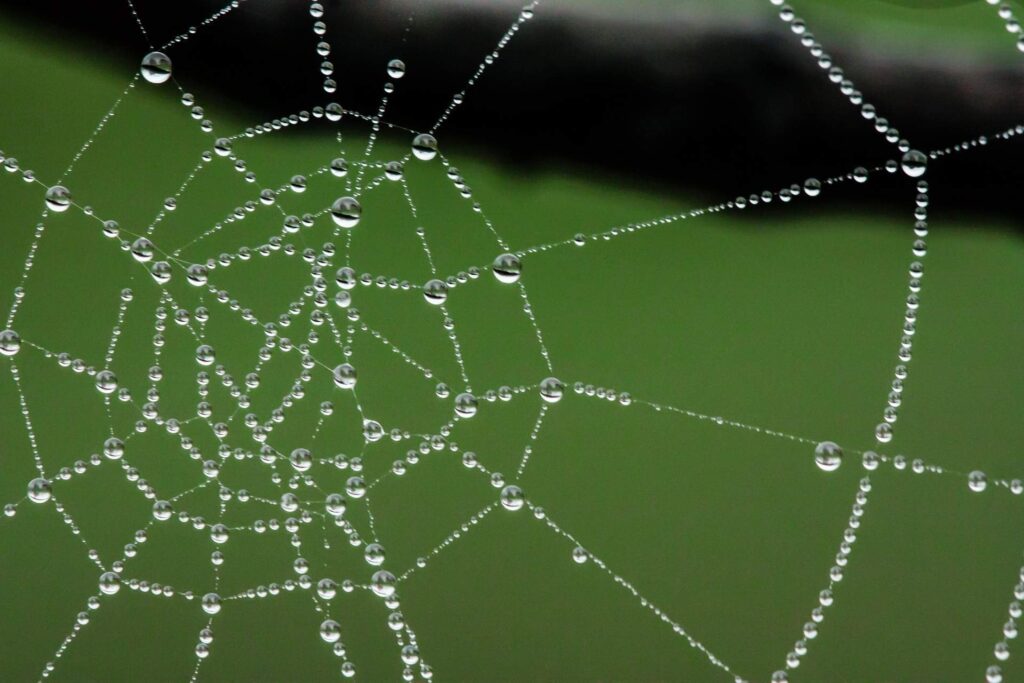
As I’ve tried to make clear, when we strip away the delusions of our own personal immortality project, much of what’s left in this world that continues to provide meaning are our relationships with others. What about that highest form of human connection though? How does death affect our ability to love? This isn’t an easy question, as I’m not sure I really understand love that well, but when I think of love in Thanatism, I see it as a web anchored between two sets of opposites.
The first set of opposites the web of Thanatist love connects is acceptance and honesty. On the side of acceptance, Thanatist love isn’t controlling. It doesn’t define what a person must be and then attempt to mold every human being into that predefined vision of humanity. Just the opposite in fact. As I’ve said before, as Thanatists, we deeply understand that each of us has been thrown into a being not of our own choosing. Because of this, we have a deep and abiding respect for the uniqueness of each of us.
Further rooting Thanatist love in acceptance is that foundational to Thanatism is a moment of choice. When we first fully realize and accept our own mortality, we experience a moment of rebirth. In this foundational moment, and throughout life, as we learn to bring forth the power of death daily, we have a profound ability and responsibility to choose ourselves. This choice is sacred and deeply individual, and as such due the utmost respect.
Having said that, Thanatism is equally a faith of radical honesty. Our foundational belief revolves around the destruction of self-delusion and the power of honest self-reflection. Because of this, Thanatist love is deeply committed to speaking the truth regardless of the consequences. Thanatist love does not accept others unconditionally, rather it challenges others to become their truer selves.
This creates a relational tension born of love that’s difficult to navigate. On one hand, we don’t want to control or possess the other person. We respect their uniqueness and right to choose their life. On the other hand, we also know the keen ability that each of us possesses to deceive ourselves, so we also have an obligation to honestly and fearlessly help those we love see their own resistances. Navigating these two poles while simultaneously guarding against our own tendencies towards control and self-deception make this first tension in Thanatist love no easy task.
The second set of tensions the web of Thanatist love anchors itself between is that of change and commitment. As I said above, as Thanatists we understand that who we currently are is not the only person we can be. Every day presents an opportunity for self-discovery and reinvention. Because of that, Thanatist love understands that people are a continuum of change throughout their lives, and as such, it to some degree encourages regular self-transformation.
On the other hand, we also understand how important it is to know another and to be fully known. We understand that no one will ever truly know the person we are without having lived through most of our lives with us. In a real sense, we understand that once the relationships of our pasts are severed, the person who we once were, has already died. Those who have known us longest, no matter how flawed, are the only candidates for lifelong knowing. This makes those relationships uniquely precious and worthy of preservation in spite of the challenges they bring. In other words, Thanatist love values commitment as much as it respects change.
As Thanatists, others matter more than anything else in this world, and as such, so does love. Love is never easy though. For Thanatists, it requires living in a delicate web, one that binds together acceptance with honesty and change to commitment. Spanning such extremes of existence will always require constant vigilance and a great deal of compassion to withstand the vicissitudes of life. If maintained, however, each of us has the profound opportunity to build with another that most wondrous of all human patterns–the one we call love.